

Current Account vs Savings Account – Which One Should You Open in 2025?
Current account vs savings account – having a bank account is the first step towards your financial journey. While taking the first step, you need to be highly vigilant. For this, choosing the right bank account is indeed a crucial step in managing your finances effectively. Whether you are a full-time employee, an entrepreneur, a freelancer, or even a student, having a bank account really matters. Trying to decide whether to open a current bank account and a savings account really matters as you define your financial journey. How to handle your financial transactions and your overall approach to money management totally depends on your financial goal. As we look ahead to 2025, with banks offering more personalized financial management options, it’s essential to fully understand the differences as well as the pros and cons between these two account types. Let’s dive into the key differences of a current account vs savings account, understand the merits and drawbacks, as well as which account is best suited for you, so you can make a well-informed choice this year for your financial growth.
First, let’s take a look at and understand the concept of a savings bank account before you opt for one.
Understanding the concept of a savings bank account
Opening a savings account is the first step towards initiating your financial management journey. This genre of bank account is indeed a great tool if you are a person looking to stash away some cash while earning a little interest on your bank balance. This type of bank account is perfect for salaried workers, students, and also for homemakers, who are willing to keep their money safe while still seeing some modest returns. You also need to know savings account features before opening an account.
Key features of savings accounts:
Interest earnings –Standing in 2025, most banks offer interest rates ranging from 2.5% to a maximum of 6% per year. The interest amount is usually calculated daily and paid out either quarterly or on a monthly basis.
Limited transactions- As per recent banking norms, though as a user, you can freely deposit and withdraw funds, you need to be careful. Why? If you exceed the monthly withdrawal limit, you will need to pay some fees.
Minimum balance- In most banks, if you have a savings account, you need to maintain a minimum balance each month, which can range from a minimum of Rs 500 to Rs 10,000, depending on the bank branch location as well as the account type.
ATM & online banking – You can avail free access to ATMs, along with mobile banking applications as well as internet banking for your convenience.
Linked benefits- Savings accounts can be seamlessly connected to different investment accounts or demat accounts. This account can also be well used for automated payment options like EMIs, as well as bills.


Understanding the concept of the current account
If you are thinking of opening a current account, then you need to know that the main purpose of this account is to cater to several businesses, professionals, as well as traders who need to handle frequent and high-volume transactions on a daily basis. Unlike savings accounts, current account benefits don’t provide any interest on the balance.
Key features of current accounts
No interest – Being an account totally based on transactions, it doesn’t offer any interest.
Unlimited transactions – There’s no specified limit on deposits as well as withdrawals for this account type, making it perfect for those with high-volume banking requirements.
Overdraft facility – This feature can indeed benefit you if, by any chance, you run out of cash. Most banks let you overdraw up to a certain limit.
Higher minimum balance – You may need to maintain a minimum average balance ranging from Rs 5,000 to Rs 1,00,000, or it can be even more. This amount totally depends on the account type.
Business tools- These accounts often come with added services like bulk payments, forex trading support, salary disbursement, and more.
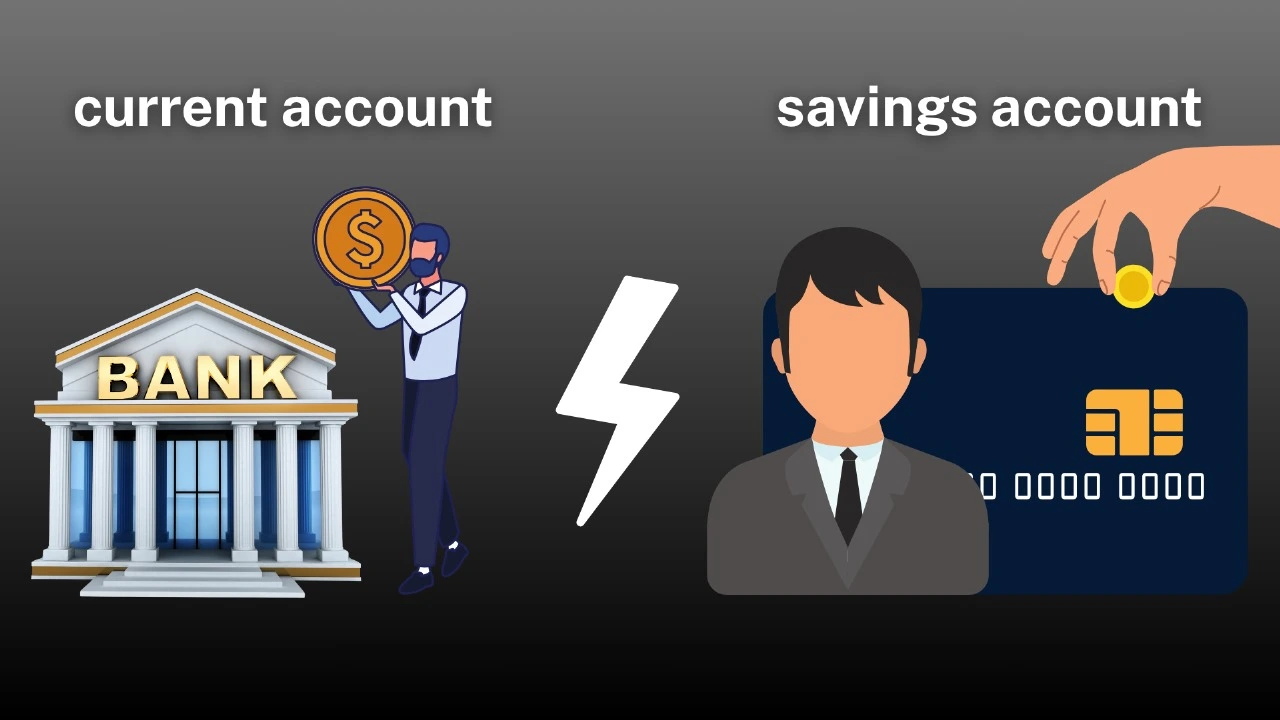
Difference between a current and a savings account in India
Let’s take a delve into a comprehensive summary showcasing the main differences between a current account and a savings account in India. While each bank might have its own unique set of features or variations, the table differences present the most commonly recognized distinctions and general principles.
Purpose
Current account – The main purpose of this account is that you can carry on frequent financial transactions, along with spending.
Savings account – This bank account type can help you with savings, along with wealth-building purposes.
Suitability
Current account – This genre of account is suitable mainly for entrepreneurs, businessmen, companies, and even for small firms.
Savings account – A Savings account can be the perfect option for a salaried individual with a fixed or a monthly income.
Interest rate
Current account – It doesn’t offer any interest, as the main purpose is to deal with transactions.
Savings account – Usually, a savings account holder can gain 3.5% – 4% interest rate depending on the amount stashed in the bank account.
Transaction Limit
Current account – A user can carry multiple transactions without any charges or fees.
Savings account – Transaction is usually limited. If you carry transactions after a set limit, you may need to pay additional charges.
Overdrawing
Current account – You are eligible to carry on overdrawing.
Savings account – You are not eligible to carry on overdrawing.
Banking trends to observe in 2025
In the present-day scenario, standing in 2025, the Indian banking landscape undergoes a rapid digital transformation, with different types of bank accounts in India, both current and savings accounts are stepping up to provide more tailored experiences.
Neo-Banks and Fintech Savings Accounts– By 2025, neo-banks will be offering savings accounts that usually come with no fees. These accounts will offer interest rates soaring up to 7% with goal-oriented savings options, along with insights powered by AI.
Smart Current Accounts for SMEs -Today’s current accounts are getting a gradual makeover with several aspects like automated bookkeeping, seamless integrations with Tally, along with credit insights. From these, small and medium enterprises, or in short SMEs, are gaining better financial control.
Personalized Offers & Ecosystems Banks – Different account types are now coming up with exclusive perks such as Amazon or Flipkart vouchers, cashback on fuel, and other complimentary rewards tailored to customer profiles.
Disclaimer – This blog is for informational purposes only. Before conducting any investment, it is advisable to carry out comprehensive research.
People Also Ask Current Account vs Savings Account
What’s the main difference between a current account and a savings account?
Talking about current accounts, they let you make unlimited transactions. But Savings accounts help you earn interest, but with limited withdrawals.
Which account is better for receiving a salary: a savings account or a checking account?
A savings account is the best option for salaried individuals as it offers interest.
Do current accounts earn interest?
Current accounts don’t usually offer any interest on the balance you maintain.
Can I switch a savings account to a current account?
An individual can switch a savings account to a checking account, but to do that, they will need to meet certain business requirements.
What are the downsides of a current account?
Common drawbacks include no interest earnings, a high minimum balance requirement, and various service charges.
Is a PAN card necessary to open a current account?
In the Indian banking system, you must provide a valid PAN card while opening a current account.