


How to Get a Loan Against Mutual Funds: Benefits, Interest Rates & Process
Are you facing a sudden financial emergency? Well, managing such situations often means you require quick access to cash, and taking out funds from long-term investments isn’t always a good move. Then what is the way out? The solution is that if you have invested your money into mutual funds, you can get the right opportunity to avail the funds you require without having to actually sell your investments. That’s where a loan against mutual funds, or in short, LAMF, comes into play.
In this blog, you can learn through a quick and comprehensive guide related to loan opportunities from mutual funds. We will dive into what a loan against mutual funds is all about, the merits or perks it offers, who’s eligible for such a loan, the interest rates you can expect, the process involved, along with some key things to consider before you go for it.
Before we proceed further, let’s first understand the concept of a loan against a mutual fund.
What is a loan against a mutual fund?
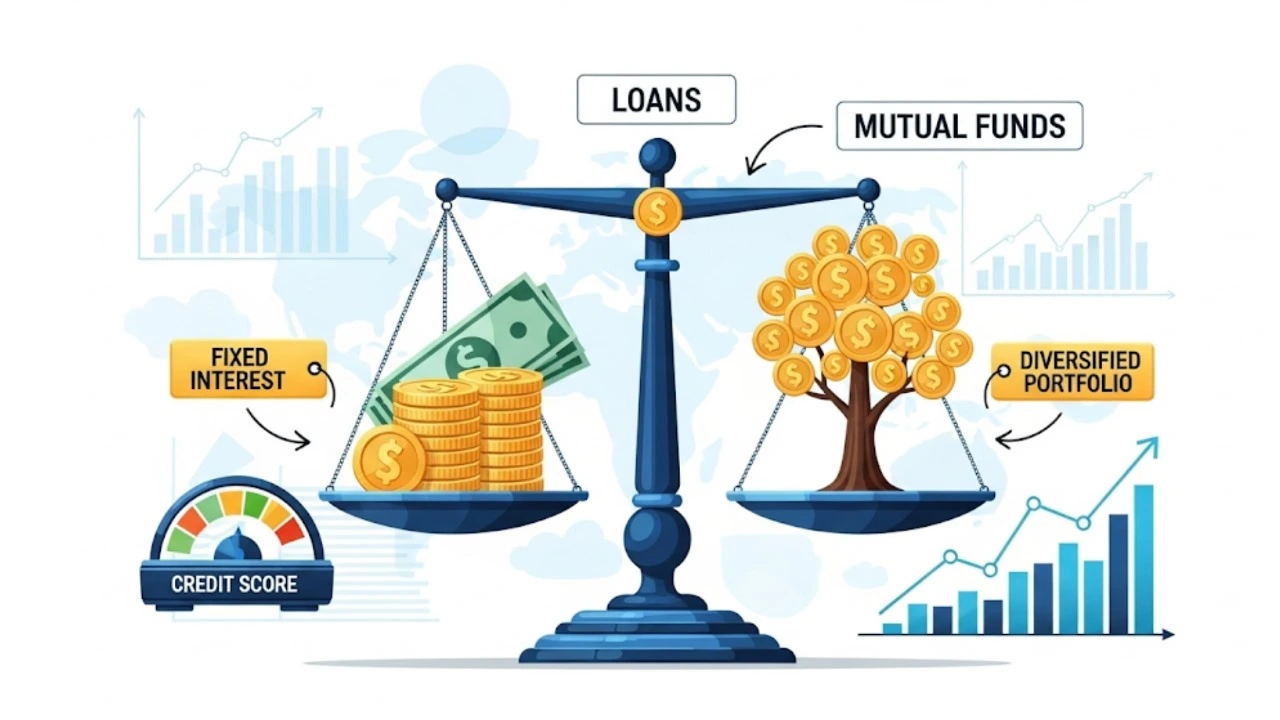
A loan against mutual funds, also termed as LAMF, is a secured loan opportunity where you can easily utilize your mutual fund units as collateral with a bank or even a Non-Banking Financial Company, or in short, NBFC, to access funds. Instead of taking cash out of your investments, you can keep them while still enjoying some liquidity.
The amount you are planning to borrow is totally based on the Net Asset Value, or in short, NAV. The borrowing amount also depends on the mutual funds you pledge, as well as the lender’s margin needs. Generally, lenders provide:
- Up to 60–70% of the mutual fund’s equity value
- Up to 80% of the value of debt mutual funds
So, if you are investing in a mutual fund of around Rs 10 lakh, you can opt for a borrowing amount between Rs 6 lakh to Rs 8 lakh. But it entirely depends on the type of funds you have.
Key merits of a loan against mutual funds
Quick access to funds
Availing a loan is much faster and agile than going through the usual platforms. Getting loans from mutual funds often requires just a few hours or a day’s time. This is because mutual funds can be easily valued and pledged online.
Lower interest rates
Yes, availing a mutual fund backed loan it means you can get loans at lower interest rates than usual loan options from banks. Moreover, this is a secured loan, so you will find that the interest rates are much lower compared to personal loans or credit card debt.
No need to sell investments
Mutual funds usually stay invested in the market. So, you won’t need to sell your mutual fund or miss out on any potential future gains. You can even get an instant loan against mutual funds.
Flexible end-use
Whatever your purpose, you can very easily utilize the loan without any hesitation. It may be for medical emergencies, education, travel, weddings, or even for your business.
Overdraft facility
Many lenders provide this loan as an overdraft account, meaning you only pay interest on the amount you actually withdraw, not on the full limit approved.
No credit score dependency
As this genre of loan is secured, your credit score doesn’t become crucial for approval. Even if you have a limited credit history, you can still apply and qualify for this type of loan.


Eligibility criteria for a loan against mutual funds
The eligibility criteria for loan against mutual funds units can rightly differ from one lender to another, it may vary. But here are some common requirements that you need to fulfil before obtaining a loan.
Age: Typically, applicants should be between 18 and 65 years old. So, the age range is also wide, catering to almost different age groups.
Investor type: Both salaried individuals, along with self-employed professionals or even business owners, are welcome to apply for a loan.
KYC compliance: You need to fully complete your KYC for any mutual fund investments.
Minimum holding: Some lenders might ask for a minimum fund value, usually around Rs 25,000 or even more.
Eligible funds: When it comes to eligibility, most lenders will accept both equity as well as debt mutual funds that are registered with recognized Asset Management Companies, or in brief, AMCs.
Interest rates on loans against mutual funds
When it comes to interest rates on loans against mutual funds, you will find that the interest rates are significantly lower compared to unsecured loans. Here’s a quick breakdown of interest rates. Let’s take a look.
- Equity mutual funds: interest rate varies from 9% – 12% per year
- Debt mutual funds: the rate of interest varies from 7% – 10% per year
You need to keep in mind that these rates can fluctuate based on certain aspects like the lender, your relationship with the bank, as well as the amount you are planning to borrow:
On top of that, lenders might also impose some additional charges, such as:
- Processing fees: Usually vary from 0.5% – 2% of the loan amount
- Pledge creation fees from several depositories like NSDL/CDSL
- Maintenance charges for overdraft facilities, if you have one
How to Get a Loan of 1 Lakh Without Income Proof in 2025 – No Salary Slip?
Documents required for the application for a loan
If you are trying to opt for this category loan, you will need to provide certain documents. Documents required for a loan against mutual funds are minimal and also mostly based on KYC. So, what are the documents required?
- Aadhaar Card / PAN Card
- Address Proof like Voter ID, Passport, Utility Bill)
- Bank Account Details
- Mutual Fund Folio Numbers / Statement of Account
- Photograph passport size
Most lenders now facilitate e-KYC along with online pledging, helping to make the process completely digital as well as a seamless one.
Taking out a loan against your mutual funds is a quick and effective process to access cash without hampering your long-term investments. With lower interest rates, speedy processing method, along with agile repayment options, it’s indeed a golden alternative to personal loans or credit card debt.
But before applying, you also need to be aware of the potential risks like market fluctuations, lien restrictions, as well as limited access to your fund’s value. Always borrow only if you genuinely need it.
PAA (People Also Ask) About Loan Against Mutual Fund
How does a loan against mutual funds work in India?
Mutual fund units can be utilized as collateral. Here, loans are usually granted based on the index of Net Asset Value NAV.
What is the eligibility for a loan against mutual funds?
Investors whose age ranges between 18 to 65 and is KYC-compliant with satisfactory mutual fund holdings are eligible.
Which banks provide loans against mutual funds in India?
Several banks like HDFC, ICICI, SBI, Axis, along with non-banking financial companies or NBFCs such as Bajaj Finserv, are eligible.
What is the interest rate for a loan against mutual funds in 2025?
Standing in 2025, interest rates generally fall between 7% and 12% annually.
Can I get an instant online loan against mutual funds?
At present, several banks offer instant digital approvals along with the option to avail an instant online loan against mutual funds.


